
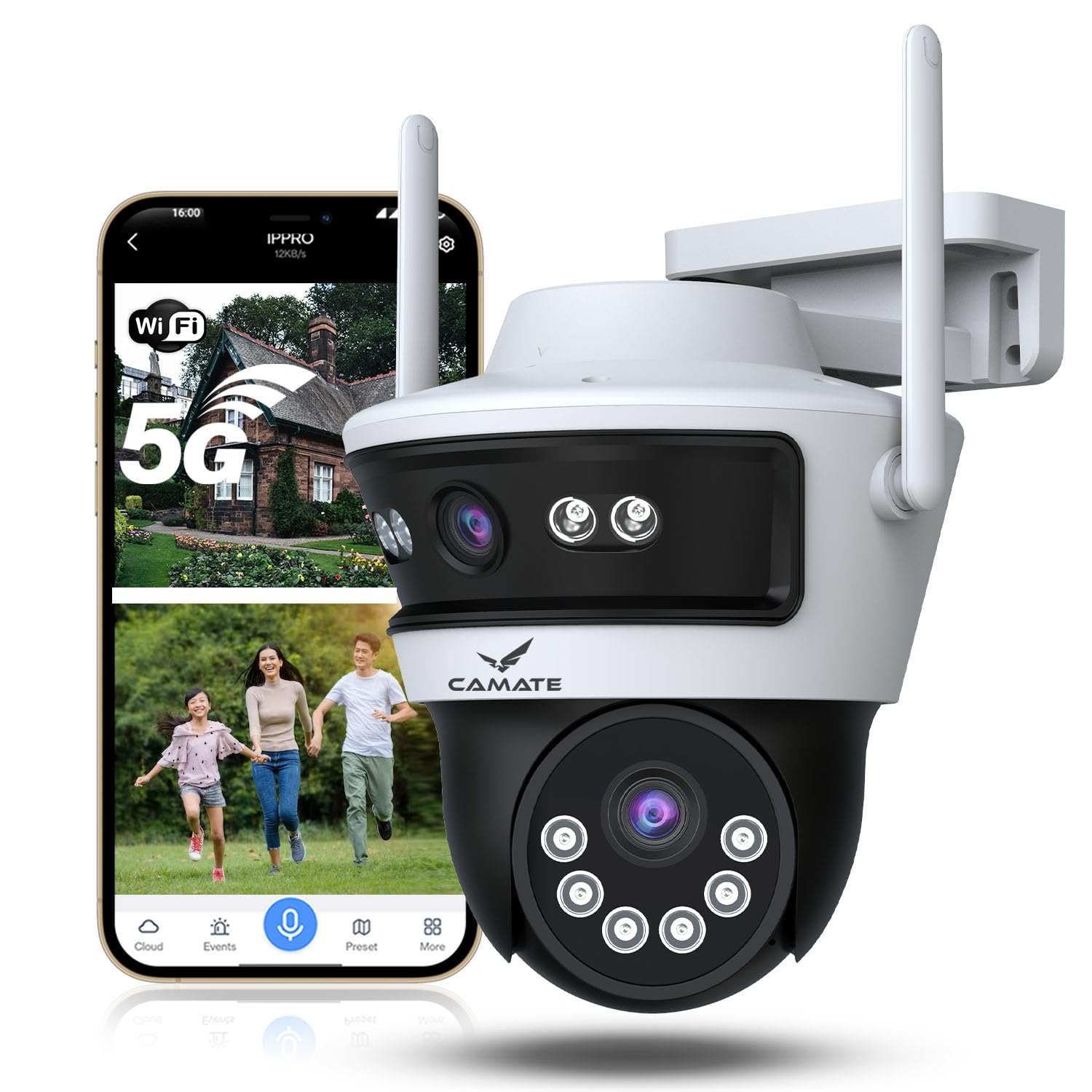
Camate Arc Duo 3+3MP Dual-Lens (2.4/5 Ghz Wi-Fi Connectivity) Wireless CCTV Security Camera | Two Way Talk | Motion Detection | Colored Night Vision | Support 256 GB sd Card (WiFi Connectivity)
Original price was: ₹8,999.00.₹4,999.00Current price is: ₹4,999.00.
Related Products

L0GITECH Brio 100 Full HD 1080p Webcam with Built-in Mic, Auto Light Balance, Privacy Shutter, USB Plug & Play Web Camera for PC/Laptop, Compatible with Zoom, Teams & Google Meet, OffWhite (OffWhite)

IFITech 4G Sim Based 3MP Car Dashcam 2K Real QHD Car Dash Camera, Dual Channel, Built-in GPS, 140° Wide-Angle View, G-Sensor, NightPulse Vision, Microphone, App Control | Support 128GB microSD Card

Camate Stellar Duo 4+4MP 4G SIM Based Wireless Outdoor CCTV Camera | Solar Powered Battery | No WiFi Needed | Color Night Vision | Motion Detection | 2-Way Audio | Weatherproof | Supports 256GB SDcard

GPSDrone with Dual 4K Camera, ProfessionalDrone with EIS and Brushless Motors, Comes with 1 Batteries, Supports WiFi Transmission and Trajectory Flight, Ideal Professional Drone for Adults

2 Channel 4K Ultra HD WiFi Dash Cam for Car with Front & Rear Recording, Type-C Dashboard Camera with Night Vision, 170° Wide Angle, Loop Recording, G-Sensor, Mobile App Control, Car DVR Recorder




Price: ₹8,999 - ₹4,999.00
(as of Jun 11, 2026 09:24:45 UTC – Details)
From the brand


CAMATE technology team was founded in 1999. After many years of unremitting efforts, CAMATE has become the leading IP camera manufacturer with its professional R&D team and strong sales team.
Based on the desire to protect privacy, our mission is to provide high-value security surveillance cameras. The professional aftersales team protects what you care about most and let you rest easy.
CAMATE provides reliable help for your quality of life.
4G sim camera festival deals
Wifi based CCTV Camera

Solar 4g CCTV Camera
Camera for remote area with no internet & electricity.
5GHz & 2.4GHz Dual Band: Our security camera outdoor supports 5GHz and 2.4GHz dual band Wi-Fi connection. The 5GHz band has higher transmission rates and less interference than the 2.4GHz band, while the 2.4GHz band has wider coverage and better penetration. This not only provides a more stable and faster network connection but also increases coverage and signal strength to ensure stable and efficient video surveillance services.
DUAL LENS SYSTEM: Features a fixed wide-angle bullet lens for key area monitoring and a 360-degree rotating dome lens for comprehensive surveillance coverage
MOBILE MONITORING: Compatible with EseeCloud app for real-time alerts, live viewing, and complete camera control through your smartphone
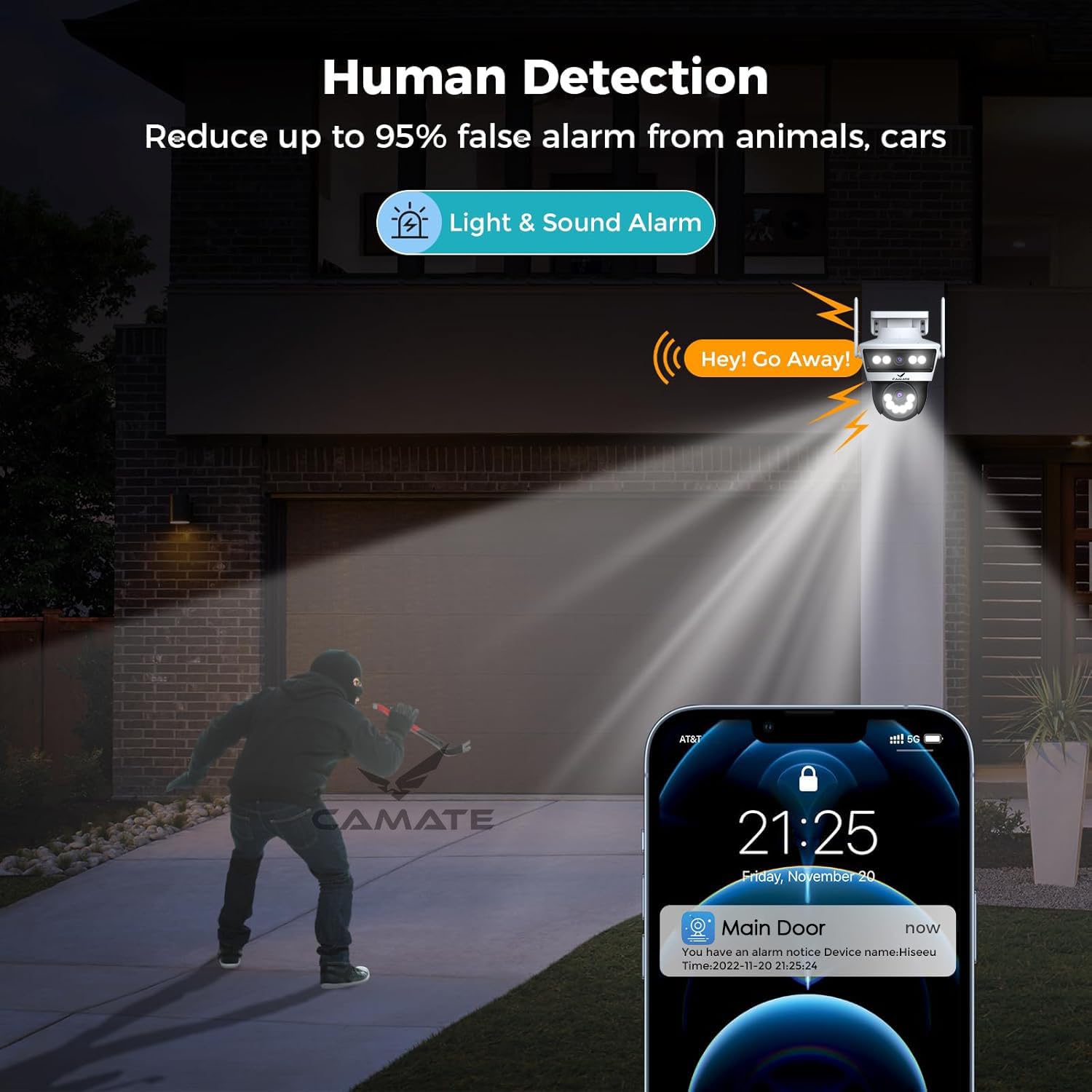
NIGHT SECURITY: Equipped with powerful spotlights and sound alarm system that activates upon detection, featuring audio warnings to deter intruders
SMART TRACKING: Innovative auto-tracking feature allows dome camera to automatically position, rotate, and lock onto detected targets when movement is sensed
INTELLIGENT DETECTION: Advanced PIR and radar dual sensing system with human detection technology reduces false alarms by up to 95% from animals and vehicles
SEAMLESS RECORDING : With supports of upto 256 GB SD card, you wan have the loop recording of more than one month and it will start deleting the old videos once the SD card is full. (SD card need to buy separately)
[Customer Care Support] : In case of any query please message on the customer care whatsapp number on the box and our team will connect you shortly.
User Reviews
Be the first to review “Camate Arc Duo 3+3MP Dual-Lens (2.4/5 Ghz Wi-Fi Connectivity) Wireless CCTV Security Camera | Two Way Talk | Motion Detection | Colored Night Vision | Support 256 GB sd Card (WiFi Connectivity)”
Original price was: ₹8,999.00.₹4,999.00Current price is: ₹4,999.00.
There are no reviews yet.