Smart glasses used to feel like a gimmick. That’s changed fast. Picking the AI smart glasses in 2026 is no longer just about looks; it’s about what they can do for you day-to-day, and the lineup of AI smart glasses on shelves right now is stronger than ever.
A good pair combines a camera, a microphone, tiny speakers, and an assistant that listens and responds. People use them for calls, quick photos, real-time translation, hands-free navigation, and a bit of entertainment. Here’s a look at the best AI smart glasses in 2026 and what makes each option worth considering.
What Are AI Smart Glasses, Really?
AI-powered glasses pack a camera, speakers, a microphone, and a voice assistant into a frame that looks close to normal eyewear. The assistant is the part that changes everything: instead of pulling out your phone, you need to ask a question out loud and get an answer through the speakers.
The difference between older smart glasses and today’s smart glasses with AI comes down to intelligence. Older versions just took photos or played audio. Now, they understand context and connect smoothly with your phone for messages, maps, and music.
The Best AI Smart Glasses in 2026, Compared
Ray-Ban Meta Smart Glasses
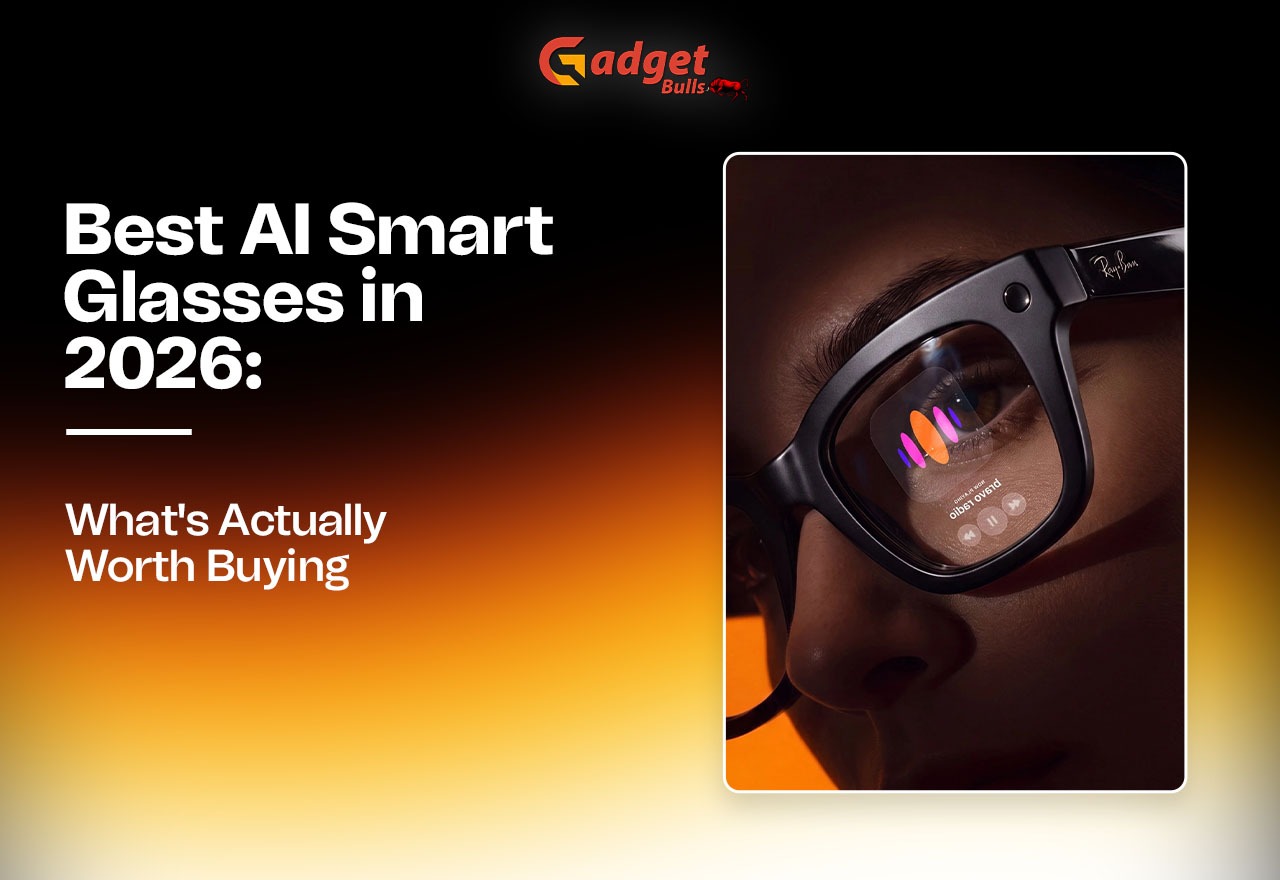
The Ray-Ban Meta smart glasses are probably the name most people recognize, and for good reason. They pair a useful Meta voice assistant with a solid camera for hands-free photos and video. Calls sound clear, and music holds up well through the open-ear speakers. For everyday users and creators alike, these are consistently ranked among the best AI smart glasses in 2026.
Oakley Meta Smart Glasses
Oakley Meta Smart Glasses: Built for a sportier crowd, these lean into durability and performance. The assistant and camera work much like their Ray-Ban sibling, but the design and audio are tuned for movement: cycling, running, or a hike where you don’t want cords getting in the way.
XREAL Smart Glasses
If gaming and immersive visuals matter more than photography, XREAL smart glasses take a different approach with augmented reality displays. These are genuinely some of the better smart glasses for gaming right now, doubling as a private, portable screen when paired with a phone or laptop.
Android XR Smart Glasses
Google’s entry leans on its own AI model, offering voice help, real-time translation, and navigation baked right in. For Android users, this could become one of the more capable smart glasses with voice assistant options once fully rolled out, and a serious contender among the best Android XR Smart glasses and best AI smart glasses in 2026.
Key Features Worth Comparing
- AI Assistant — Look for one that understands context, not just simple commands. A responsive assistant separates a gimmick from genuinely useful AI glasses for everyday use.
- Camera — Check photo and video quality, and how easy hands-free recording is. If content creation or travel photography matters, prioritize AI glasses with camera performance that holds up in low light.
- Audio — Open-ear speakers, clear calls, and decent music playback matter more than people expect once they’re wearing the glasses daily.
- Battery Life — Most pairs last a few hours of active use, topped up by a charging case.
- Display — Some pairs skip a screen entirely, while AR-focused options like XREAL add a visual layer for gaming and apps. This is one of the clearer ways to sort the best smart glasses 2026 has on offer into categories — screen versus no screen.
If hands-free voice help matters most, look closely at any smart glasses with voice assistant support built in, since not every pair handles this equally well.
Pros and Cons of AI Smart Glasses
Honestly, nothing’s perfect, and picking the best AI smart glasses in 2026 means considering some real trade-offs before you commit.
Pros
- Hands-free AI assistance lets you ask questions, get directions, or control your glasses without ever touching your phone.
- Easy photography and video recording mean you can capture moments instantly, right from your point of view.
- Convenient calls and music let you stay connected and entertained without pulling out a phone or wearing bulky headphones.
- Translation and navigation features make it easier to get around and communicate while traveling or exploring new places.
Cons
- Limited battery life means most pairs need to be recharged after just a few hours of active use.
- Privacy concerns are worth taking seriously, since the built-in cameras and microphones can record more than people around you may expect.
- Premium pricing puts most models well above what a regular pair of glasses or headphones would cost.
- Many smart glasses with AI still require an internet connection or a nearby smartphone to unlock their full range of features.
How to Choose the Right Pair
- Compare the essentials — AI features, camera quality, comfort, and battery life side by side, since this is how most people narrow down the best smart glasses 2026 has to offer.
- Check compatibility — confirm the glasses work smoothly with your phone, whether Android or iPhone.
- Match your use case — decide whether you need AI glasses for everyday use, something built for gaming, or smart glasses for travel focused on translation and navigation.
- Check availability locally — if you’re shopping in India, confirm which AI-powered glasses features are actually supported in your region before buying.
Choosing well comes down to matching the right AI smart glasses to how you actually spend your day, not just picking the most talked-about option, which is exactly why so many buying guides for the best AI smart glasses in 2026 tend to focus on lifestyle fit over specs alone.
Final Thoughts
There’s no single “best” pair for everyone. The best AI smart glasses depend on your budget, your daily habits, and what you want them to do: chatting with an assistant hands-free, capturing memories on the move, or stepping into a more immersive screen. There is no single top choice among 2026 smart glasses; what works best comes down to individual preference and routine; they’re defined by the pair that fits how you live. Compare a few models, try them on if you can, because the best AI smart glasses in 2026 are only “best” if they work for you.