Think about the last time you bought something online. You probably did not just click ‘add to cart’. You scrolled down to the reviews. You looked for photos from real buyers. You searched for a YouTube video. Maybe you texted a friend. Or you found a creator you follow, watched them use it, and thought: if they like it, I probably will too.
You did all of that because somewhere along the way, you stopped trusting the internet.
Not consciously. But the behavior tells the story. We are a generation that is drowning in recommendations and starving for ones we can actually believe.
This is the behavioral truth that Rippl is building on.
The trust gap that nobody solved
Studies estimate that nearly half of all online reviews today are fake or manipulated. Affiliate deals are disclosed in fine print. Influencer posts blur the line between belief and sponsorship. Algorithms surface content based on what performs, not what is genuine.
And yet, creator-led commerce is booming. A reel still drives purchases. A recommendation still changes behavior. The mechanism works. What is broken is the layer of trust around it.
What emerged over the past decade is a paradox: people are more influenced by online recommendations than ever, and more skeptical of them than ever. The result is a discovery experience that is simultaneously overwhelming and unreliable.
“The internet does not have a discovery problem,” says Shikhar Vaidya, Co-founder of Rippl. “It has a trust problem. Too much of what we see today is shaped by incentives, not intent.”
A new category, not a new feature
Rippl wants to position itself as something the creator economy has not yet seen: a trust-based recommendation ecosystem.
What the platform is building is a space where recommendations are structured around credibility rather than reach. Whether you are a user, a creator, a celebrity, or simply someone with strong opinions about the best coffee in your city, Rippl is designed for anyone who wants to recommend something they genuinely use and love, and get rewarded for it. A creator’s identity here is defined not just by their content but by everything they genuinely use, watch, read, listen to, and visit. And a shopper can discover through people they actually trust, rather than through an algorithm optimized for engagement.
Co-founder Smriti Dubey frames it simply: “People don’t follow content. They follow taste and relatability. Every time I discover something, I look for reviews from people I know and trust. What if that was built into how the internet worked?”
That question, she says, is where Rippl begins.
The cultural moment Rippl is entering
The timing is not accidental. Creator commerce is maturing rapidly, and the conversation is shifting. The early era of influencer marketing was about reach: how many people could a creator expose a brand to? The next era, increasingly, is about conversion quality. And conversion quality comes from trust.
Brands are learning that a smaller creator with a deeply credible relationship with their audience can outperform a celebrity endorsement. Audiences are gravitating toward voices that feel consistent and real over time. And the creators themselves are looking for ways to build influence that goes beyond the next campaign.
“Accessibility is important,” says Dubey, “but trust is what sustains attention.”
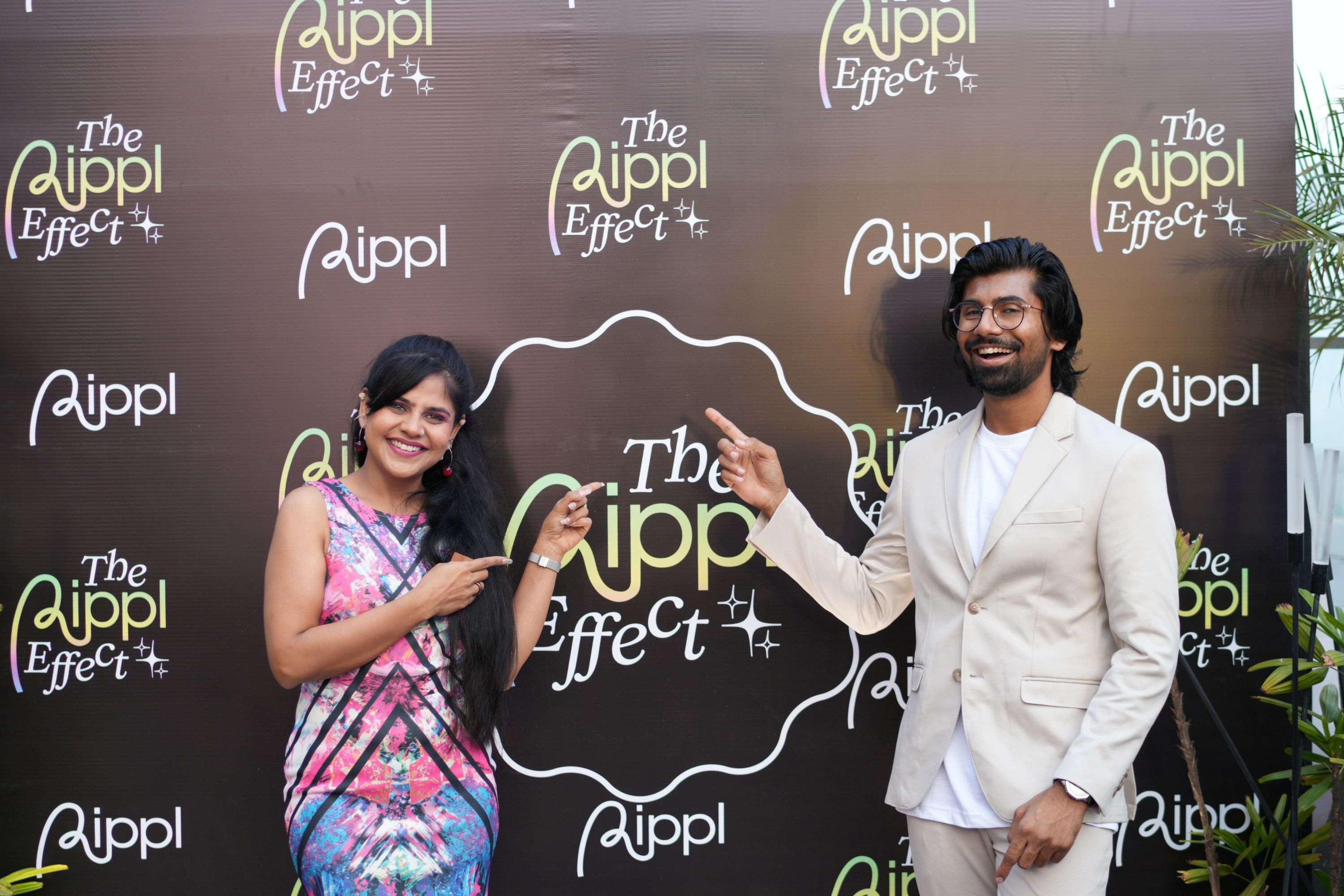
The Rippl Effect summit, which was chaired by Malini Agarwal and featured speakers including Nandini Bhalla, Viraj Sheth, and Saransh Goila, was designed to reflect exactly this shift. The conversation was not about follower counts or campaign metrics. It was about how the internet’s recommendation layer is being rebuilt from scratch.
Who is building it
Vaidya and Dubey bring over a decade of experience each across product, fashion, marketing, and consumer behavior. They started by building ReDesyn, an influencer merchandise platform, and spent four years watching how creators drive commerce up close. What they observed changed their direction.
“People weren’t just buying products,” Vaidya says. “They were buying recommendations.”
Both founders were featured on and went on to win Mission StartAb on Amazon Prime Video, and were recognized in the Entrepreneurs Today 35 Under 35 list in 2023. The company has raised a pre-Series A round of $1.3 million, backed by Silicon Road VC, Jaipuria Family Office, GKK Capital, and others, with earlier support from Fluid VC, MeitY Startup Hub, Kunal Bahl, and SheCapital VC.
The early signal
Rippl aims to roll out gradually, starting with a carefully selected group of creators in categories such as skincare, beauty, fashion, travel, and pets. The platform is planning to start with this curated first wave of creators because these are areas where recommendation-driven behavior is already a key factor in how people make decisions.
What the platform wants to get right conceptually is the question of where commerce actually begins. Not at the product page. Not at the checkout. But earlier, at the moment of discovery, when someone whose taste you trust says: I use this. You should try it.
What Rippl will ultimately respond to is not just a market opportunity, but a deeper shift in consumer behavior. People are no longer looking for endless recommendations. They are looking for signals they can trust.
In that sense, Rippl attempts to redesign one of the internet’s most influential yet broken systems: discovery itself. By centering credibility over virality and taste over algorithmic amplification, the platform is positioning itself at the intersection of creator culture, commerce, and consumer trust.
Whether that model scales remains to be seen. But as audiences grow increasingly skeptical of sponsored influence and transactional content, Rippl is entering the market at a moment when authenticity is no longer just desirable; it is becoming infrastructure.