For decades, diagnosing mental health and neurological conditions has depended more on interpretation than evidence. Conditions such as depression, schizophrenia, epilepsy, and traumatic brain injuries often leave doctors relying on behavioural assessments and prolonged observation before a diagnosis can be made. The process is slow, subjective, and for patients already navigating complex conditions, frequently exhausting.
Closing that gap requires the kind of deep, research-backed innovation that the Ministry of Education’s Bharat Innovates 2026 initiative is designed to find and amplify. The event, to be held in Nice, France, from 14 to 16 June 2026 as part of the India-France Year of Innovation, will bring around 120 R&D-backed Indian ventures across 13 frontier sectors before global investors, industry leaders, and policymakers, with the goal of opening real pathways into France, Europe, and beyond.
India’s ability to produce this kind of innovation is itself a story in progress. Reforms under the National Education Policy 2020, international research collaborations through SPARC, and the Study in India programme have collectively strengthened what Indian institutions produce and who they attract. The results are visible in how Indian universities have climbed global rankings, with institutions like IIT Delhi, IIT Madras, and IISc Bengaluru all rising significantly in recent years, and India is now among the fastest-growing higher education systems in the G20. It is from this ecosystem that some of the country’s most ambitious healthcare innovators are emerging. Among them is Bengaluru-based BrainSightAI, a company focused on transforming how mental health conditions and brain disorders are diagnosed, understood, and treated.
Founded in 2019 by CEO Laina Emmanuel and CTO Dr Rimjhim Agrawal, BrainSightAI is building AI-powered brain mapping technology designed to help neurologists, psychiatrists, and neurosurgeons make more informed clinical decisions, while also creating a more empathetic and privacy-focused support system for patients.
Mapping the brain through AI
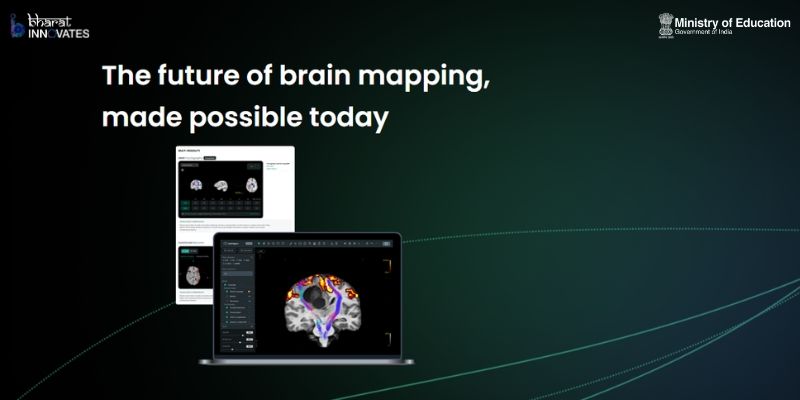
At the centre of BrainSightAI is VoxelBox, an AI and ML-based neuroimaging platform that creates personalised brain maps using resting-state fMRI, one of the few imaging techniques capable of capturing whole-brain connectivity. Radiologists upload an MRI scan to the platform, and within an hour, VoxelBox generates a detailed three-dimensional map of the patient’s brain, combining signal processing, neuroimaging, artificial intelligence, and cloud technology into a single clinical tool.
These maps give neurosurgeons, psychiatrists, and neurologists a connectomic view of the brain’s functional and structural networks. In practical terms, this allows doctors to diagnose conditions with greater precision, plan surgeries while reducing risk to critical functions such as language and emotion, and monitor how patients respond to treatment over time.
Building technology around empathy
While AI in healthcare is often framed around automation and efficiency, BrainSightAI has placed equal emphasis on patient experience. Mental health and neurological conditions frequently involve stigma, uncertainty, and emotional distress, making privacy and empathy central to care delivery. Rather than replacing doctors, the company positions VoxelBox as a clinical decision-support tool, with evidence-based features designed to help specialists understand how different regions of the brain may be functioning and tailor treatment accordingly.
Building for what comes next
BrainSightAI’s platform is already being used by neurosurgeons in brain tumour cases and has shown results in epilepsy treatment. Its longer-term roadmap includes multiple sclerosis, Parkinson’s disease, major depression, and OCD, with an eventual ambition to create a personalised 3D brain twin for every patient.
To support that vision, the company secured $5 million in a pre-Series A round led by IAN Alpha Fund, with participation from IvyCap Ventures and Silver Needle. BrainSightAI is HIPAA compliant, is pursuing FDA certification ahead of its US market entry, and has been named a winner of the Pfizer INDovation Program.
Built on India’s higher education backbone
That clinical ambition was shaped on Indian campuses and in Indian research institutions.
Laina Emmanuel, Co-founder and CEO, holds an engineering degree from NIT Calicut, one of India’s premier technical institutions, and an MBA in Marketing and Healthcare from the Indian School of Business. She brings over 15 years of experience in healthcare management, policy, and consulting. Rimjhim Agrawal, Co-founder and CTO, studied at the Vellore Institute of Technology before completing her PhD in Machine Learning in Psychiatry at NIMHANS, the National Institute of Mental Health and Neuro Sciences in Bengaluru. Her doctoral research focused on brain imaging indicators and brain markers for psychiatric disorders, including schizophrenia and OCD, laying the scientific foundation for what would become VoxelBox.
The two founders met through the Entrepreneur First accelerator in Bengaluru in 2019, where Agrawal’s deep research expertise combined with Emmanuel’s healthcare business experience to form the company. BrainSightAI has since been supported by the Google for Startups Accelerator India and the 3DEXPERIENCE Lab run by Dassault Systèmes, among others.
An NIT engineer, a NIMHANS-trained researcher, and a company now building technology used in operating theatres across India: this is precisely the kind of story the Ministry of Education’s spotlight is built to carry. Research-led ventures, rooted in Indian institutions, ready to compete on a global stage.